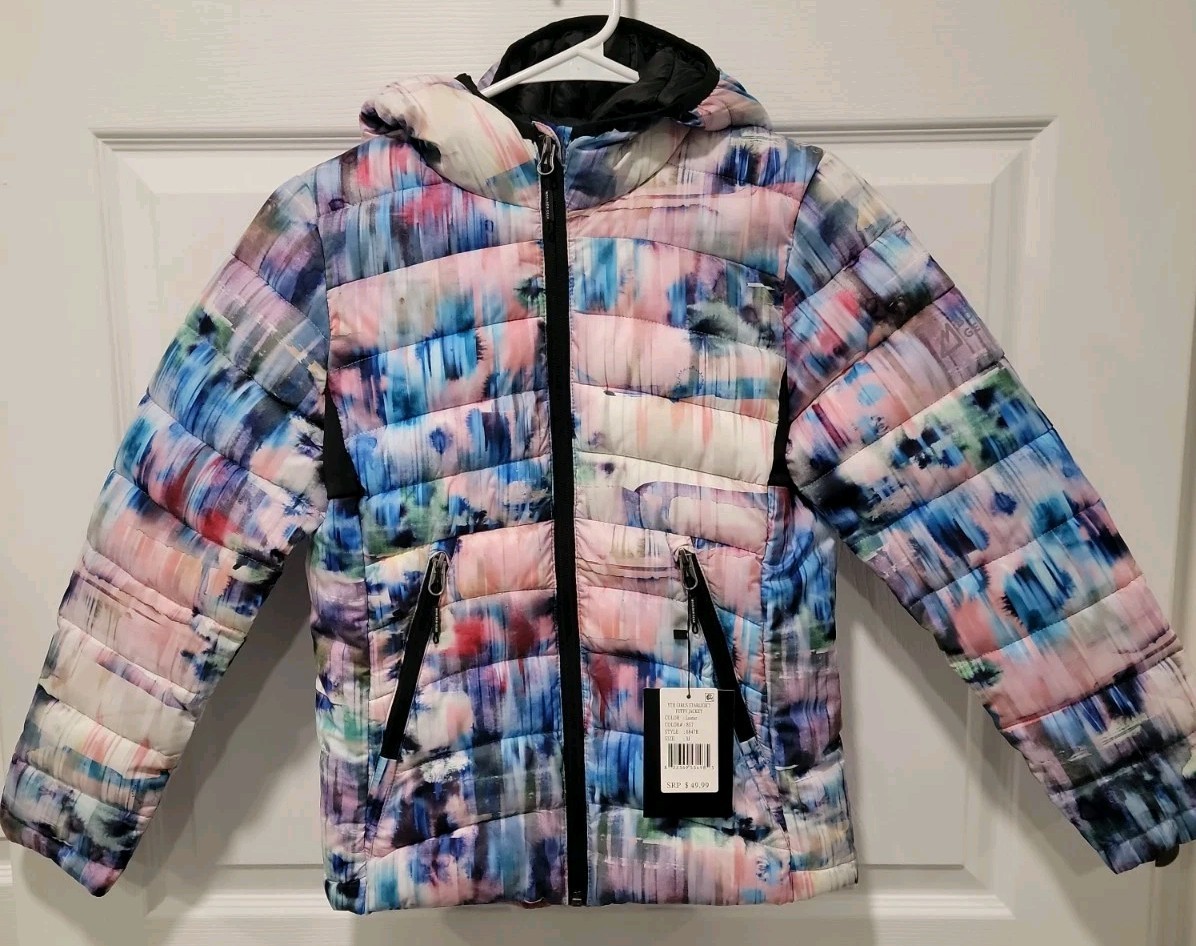

Photos from current listings. Actual item, color, and included accessories may vary.
Puffer Jacket Buying Guide
A kids' puffer jacket is a lightweight, insulated outer layer built for cold-weather play, where the core trade-off is between synthetic fill (budget-friendly, warm-when-damp) and down fill (higher warmth-to-weight, requires dry care). Durable options use baffled or quilted construction with at least 150g/m² synthetic fill or 550+ fill-power down, while compromises skimp on fill weight, use sewn-through seams that leak cold, or omit a water-resistant shell.
At a glance
- Category
- Kids' & Baby Clothing
- Last updated
- Nov 25, 2026
Current offers
Highlights
- Synthetic fill (polyester) retains warmth when damp and is machine-washable; down (550–800 fill power) offers more warmth per ounce but clumps when wet and needs specialized cleaning.
- Baffle construction matters: sewn-through seams create cold spots at stitch lines, while box-baffle or welded channels prevent fill migration and boost warmth in sub-freezing temps.
- Shell fabric rating: a 2-layer bonded shell with DWR (durable water repellent) handles light snow and sleet; uncoated nylon or polyester wets out fast and loses loft.
- Fill weight thresholds: 150–200g/m² synthetic suits active play to about 20°F; below 100g/m² is a fashion layer, not a winter jacket.
Best use cases
- Best fit: daily school commute and recess in 20–40°F — pick a 150–200g/m² synthetic puffer with DWR shell and elastic cuffs; skip 550-fill down unless the child runs cold and stays dry.
- Best fit: ski resort or snow-play day — choose a puffer with 200g+ synthetic fill, taped critical seams, and a powder skirt; avoid fashion puffers with no water resistance.
- Wrong fit: mild-weather car trips above 45°F — a lightweight 60–80g/m² vest or unlined puffer prevents overheating; skip heavy 600-fill down jackets.
- Wrong fit: wet Pacific Northwest winters — untreated down loses loft; select synthetic fill or a waterproof-breathable shell over down.
Buying tips
- Size up one full size for base layers and mid-layers; puffer jackets should allow a thin fleece underneath without compressing the insulation flat.
- Check fill weight: 150–200g/m² synthetic or 550–650 fill-power down covers most winter play; below 100g/m² is only a fall/spring layer.
- Look for articulated elbows, elastic or hook-and-loop cuffs, and a drop-tail hem — these keep warmth in during active play and reduce ride-up.
- Prefer machine-washable synthetic fill for kids under 6; down requires down-specific detergent and dryer balls, adding maintenance overhead.
Specs
| Fill Type | Synthetic polyester vs Down (550-800 FP) |
|---|---|
| Fill Weight | 60-200+ g/m² synthetic or 550+ FP down |
| Shell Water Resistance | DWR-coated vs uncoated nylon/poly |
| Construction | Sewn-through vs box-baffle / welded |
What to check before buying
- Measure chest and sleeve length against the brand's size chart; puffer jackets run 1–2 cm smaller than cotton tees due to insulation loft.
- Confirm the jacket fits over the child's typical mid-layer (fleece or hoodie) with room to raise arms overhead without the hem lifting past the waist.
- Match the temperature rating to your local winter: 150g/m² for 20–40°F, 200g+ for below 20°F, and 60–80g/m² for 40–55°F.
- Check care label: synthetic puffer should be machine-wash cold and tumble low; down needs front-load washer and down detergent to avoid clumping.
FAQ
Data sources: eBay / Amazon listings and product attribute feeds. Updated Nov 25, 2026.
Some links on this page are affiliate links. If you buy after clicking one, we may earn a commission at no extra cost to you. This does not change which products appear here or their order. Affiliate disclosure.