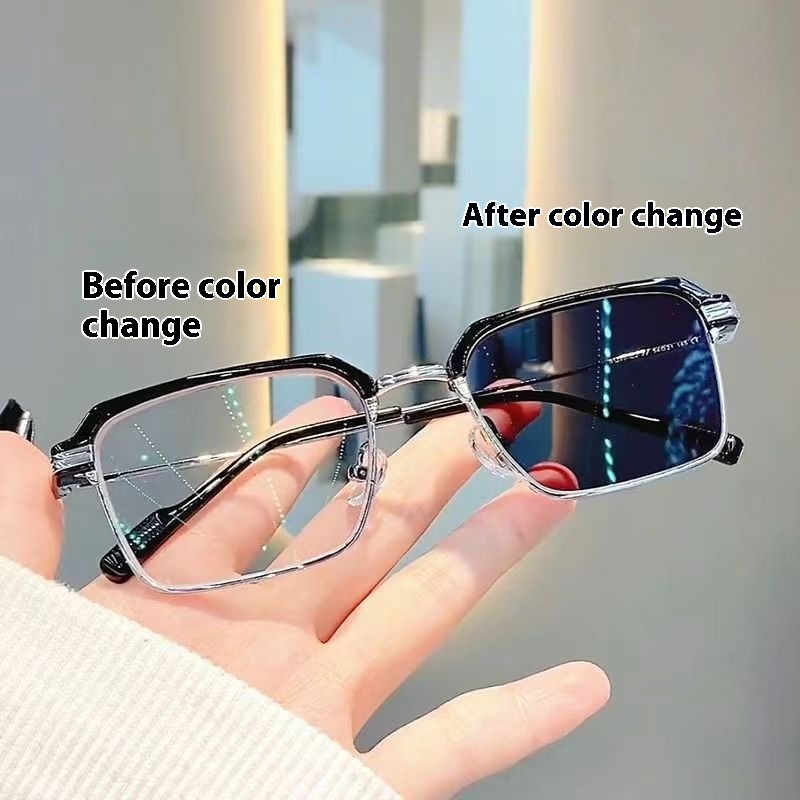

Photos from current listings. Actual item, color, and included accessories may vary.
Reading Glasses Lights Buying Guide
Reading glasses lights are eyewear frames with integrated LED illumination to brighten up-close tasks like reading, crafting, or repairs in low-light settings. The core trade-off is between small button-cell batteries that keep frames light versus rechargeable lithium cells that add weight but deliver usable runtime; lens quality and light placement determine whether the glasses actually reduce eye strain or just add glare. The clear decision rule: choose a rechargeable model with adjustable-angle LEDs and anti-glare lens coatings for daily use, and reserve disposable button-cell or non-adjustable clip-on lights for occasional, short tasks.
At a glance
- Category
- Sunglasses & Eyewear
- Last updated
- Nov 27, 2026
Current offers
Highlights
- Light source tiers: fixed micro-LEDs at 5–15 lumens suit close reading; adjustable gooseneck or dual-arm LEDs at 20–40 lumens cover wider task areas but add 15–30 g of frame weight.
- Power architecture: CR2032 button cells (2–3 per temple) give roughly 8–20 hours; USB-C rechargeable lithium cells give 4–10 hours per charge and eliminate recurring battery purchases.
- Lens options split into anti-blue-light / photosensitive photochromic coatings for screen and indoor-outdoor transitions versus clear polycarbonate readers; photochromic tint adds 5–10 seconds of transition lag.
- Frame weight and fit: integrated-light frames typically run 25–45 g; look for spring hinges and adjustable silicone nose pads so the added temple battery weight does not slide the frame down.
Best use cases
- Best fit: reading in bed or dim living rooms — pick a USB-C rechargeable model with warm-neutral LEDs (3000–4000K) and adjustable angle to avoid glare on pages.
- Best fit: crafts, sewing, and model repair — choose dual-arm or gooseneck LEDs at 20–40 lumens with a wider beam, plus a +0.50 to +1.00 diopter boost over your normal reading prescription.
- Wrong fit: all-day office screen work — skip illuminated frames entirely; use a photochromic anti-blue-light reader without LEDs, since built-in lights add weight and are unnecessary under monitor lighting.
- Wrong fit: outdoor or driving use — do not buy integrated-light readers for daylight; choose polarized or photochromic sunglasses in your reading magnification instead, as LEDs are useless and battery temples block peripheral vision.
Buying tips
- Match magnification to task distance: +1.00 to +1.50 for computer/arm's-length work, +1.75 to +2.25 for book reading, +2.50 to +3.00 for close crafts and fine print; add +0.50 if the LED beam is narrow and you hold material closer.
- For daily use, require USB-C charging (not micro-USB) and at least a 4-hour runtime spec; button-cell models are only economical if you use them under 30 minutes a day.
- Check LED placement: lights mounted on the top brow line cast glare on glossy pages; side-arm or bottom-brow LEDs with a 15–30° downward angle light the page without reflecting into the eyes.
- Verify lens coating claims: look for explicit anti-blue-light or photochromic UV400 labeling; uncoated clear acrylic lenses scratch within months and negate the frame's durability.
Specs
| Light Output | 5–40 lumens (task-dependent) |
|---|---|
| Power Source | USB-C rechargeable vs CR2032 |
| Magnification Range | +1.00 to +3.00 diopters |
| Frame Weight | 25–45 g with integrated LEDs |
Related searches
What to check before buying
- Measure your existing reading glasses' temple length and frame width (typically 135–145 mm temple, 50–55 mm lens width) so the heavier illuminated frame still fits without pressure.
- Confirm your task lighting environment: if ambient light is already above 300 lux, choose lower-lumen (5–10 lm) LEDs to avoid over-bright glare; below 100 lux, pick 20 lm or higher.
- Check charging standard: USB-C is now standard on rechargeable models; ensure you have a USB-C cable and 5V/1A charger, as some frames ship without a wall adapter.
- If you need prescription accuracy, verify the frame accepts custom lenses or choose a model with interchangeable lens inserts; integrated LED frames rarely accept standard lab lenses.
FAQ
Data sources: eBay / Amazon listings and product attribute feeds. Updated Nov 27, 2026.
Some links on this page are affiliate links. If you buy after clicking one, we may earn a commission at no extra cost to you. This does not change which products appear here or their order. Affiliate disclosure.