
Photos from current listings. Actual item, color, and included accessories may vary.
Compression Packing Cube Buying Guide
Compression packing cubes use a second zipper to physically flatten clothing, cutting packed volume by roughly 30–50% versus standard cubes. The key trade-off is zipper durability versus compression force: dual-zipper systems with reinforced stitching and YKK-style hardware hold pressure without splitting, while single-zipper or thin-shell cubes fail at the seams after a few trips. Buy dual-zipper cubes with 210D+ ripstop nylon or polyester and a compression panel that spans the full cube face; skip any cube with only one zipper, exposed coil seams, or sub-200D fabric.
At a glance
- Category
- Packing Cubes & Organizers
- Last updated
- Nov 26, 2026
Current offers
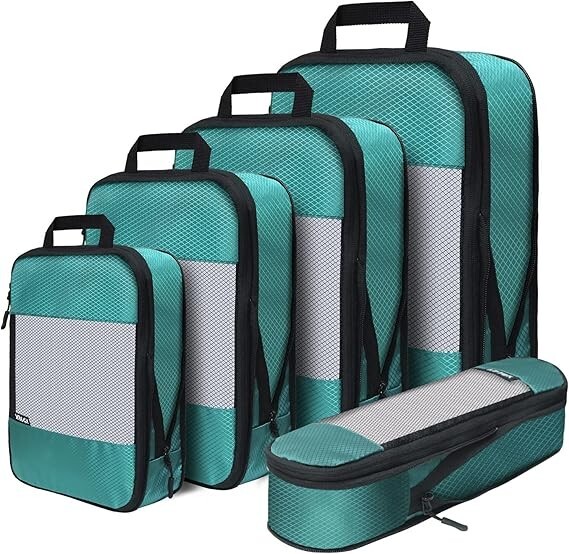 Compression Packing Cubes Set – 5 Lightweight Luggage Organizers for Travel$22.21View on eBay
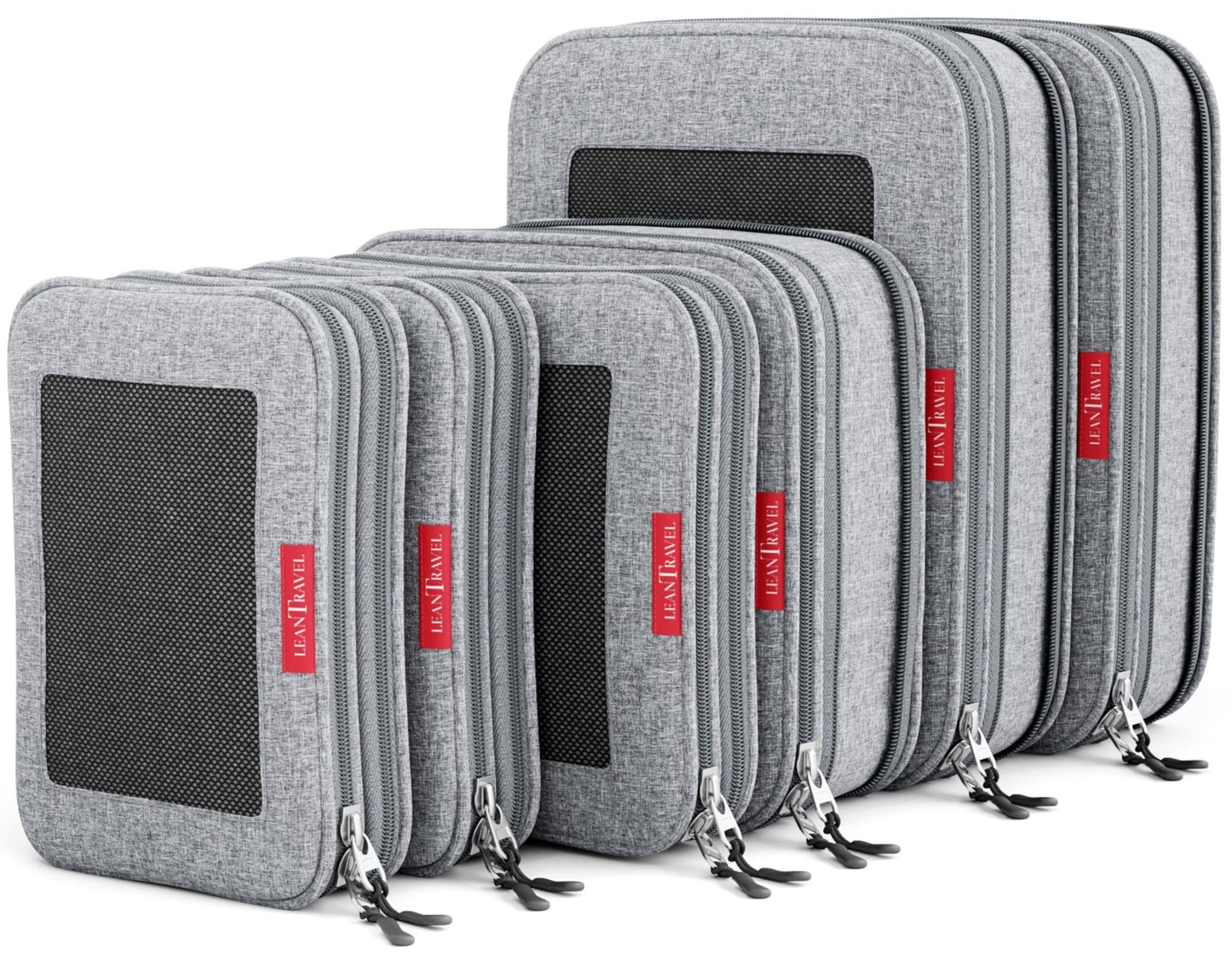 LeanTravel Compression Packing Cubes for Travel Organizers with Double Zipper...$75.99View on eBay
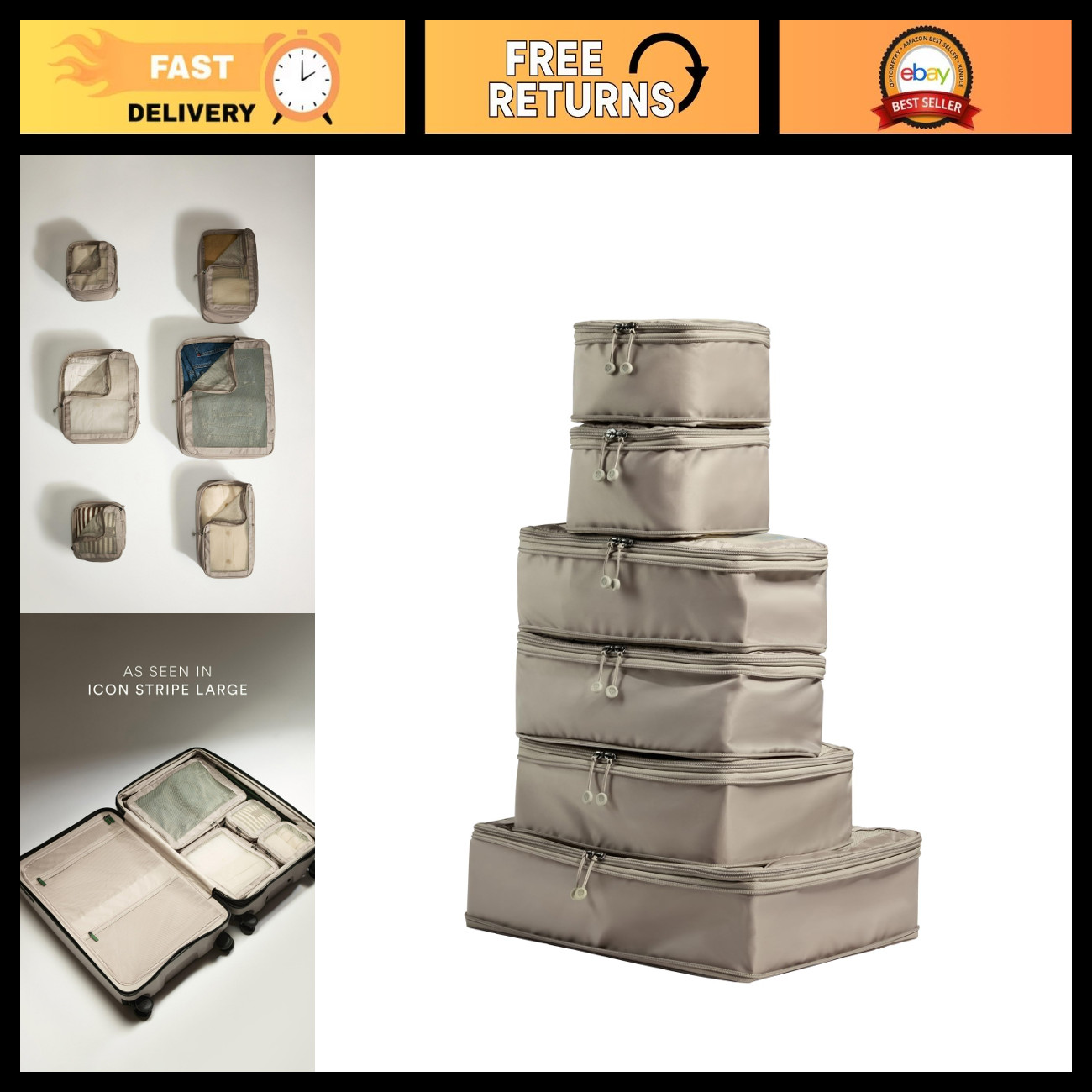 Compression Packing Cubes Set of 6 - Travel Organizers for Suitcases & Backpacks$219.99New · Last checked Nov 17, 2026View on eBay
Highlights
- Dual-zipper compression cubes flatten contents by 30–50% volume; single-zipper cubes only organize and cannot compress.
- 210D–400D ripstop nylon or polyester resists seam burst under compression; sub-200D fabric and non-ripstop weaves tear at stress points.
- Full-face compression panels distribute force evenly; partial or cross-strap designs concentrate stress and distort zipper coils.
- SBS or YKK #5+ coil zippers with double-stitched seams survive repeated compression cycles; generic #3 coils split under load.
Best use cases
- Best fit: carry-on-only travel with bulky clothing — pick a 3–5 piece dual-zipper set in 210D+ ripstop with full-face compression panels.
- Wrong fit: business travel with structured garments — compression cubes crease suits and shirts; use a garment folder or hanging bag instead.
- Best fit: checked-luggage capacity maximization — choose larger compression cubes (10–15L compressed) with reinforced handles for overhead-bin and carousel handling.
- Wrong fit: ultralight backpacking where every gram counts — compression cubes add 60–120g each; stuff sacks or roll-top dry bags compress lighter.
Buying tips
- Measure your luggage interior: a 20-inch carry-on fits 3–4 medium cubes (approx. 30×20×10 cm each); 24-inch checked fits 4–6 large cubes.
- Require dual zippers (one for access, one for compression) and a full-face compression panel; single-zipper cubes cannot compress by design.
- Choose 210D–400D ripstop nylon or polyester with double-stitched seams; 200D and below risks seam failure under repeated compression.
- Match cube count to trip length: 3-piece sets suit 3–5 day trips, 6–8 piece sets suit family or 1–2 week travel; avoid oversized sets with unused filler pieces.
Specs
| Compression Type | Dual-zipper vs single-zipper |
|---|---|
| Fabric Denier | 210D–400D ripstop nylon/polyester |
| Zipper Hardware | SBS/YKK #5+ coil, double-stitched |
| Set Size | 3–5 pc (carry-on) / 6–8 pc (checked) |
Related searches
What to check before buying
- Measure luggage interior length, width, and depth; cube footprints must sum to less than interior volume minus 10% for easy packing.
- Confirm your bag is soft-sided or clamshell; compression cubes work poorly in hard-shell halves with fixed dividers.
- Check zipper hardware spec: SBS or YKK #5+ coil with double-stitched tape; generic #3 coils split under compression load.
- Verify cube fabric is 210D+ ripstop and the compression panel spans the full face; partial panels distort shape and stress seams.
FAQ
Data sources: eBay / Amazon listings and product attribute feeds. Updated Nov 26, 2026.
Some links on this page are affiliate links. If you buy after clicking one, we may earn a commission at no extra cost to you. This does not change which products appear here or their order. Affiliate disclosure.