
Photos from current listings. Actual item, color, and included accessories may vary.
Slim Shoe Cabinet Buying Guide
A slim shoe cabinet is a shallow-depth (typically 9–12 inches) freestanding or wall-anchored unit with flip-down drawers or tilt-out compartments, designed to fit narrow hallways while hiding footwear behind doors. The core trade-off is depth and drawer mechanism quality: particleboard units with plastic hinges wobble and sag, while MDF or solid-wood frames with metal hinge plates and tip-over restraints stay aligned for years. The decision rule: buy only if the unit specifies a metal tilt-hinge mechanism, a tip-over restraint, and an adjustable shelf system—skip any cabinet that lists only 'wood' with no panel grade or hinge spec.
At a glance
- Category
- Shoe Storage & Display
- Last updated
- Nov 27, 2026
Current offers
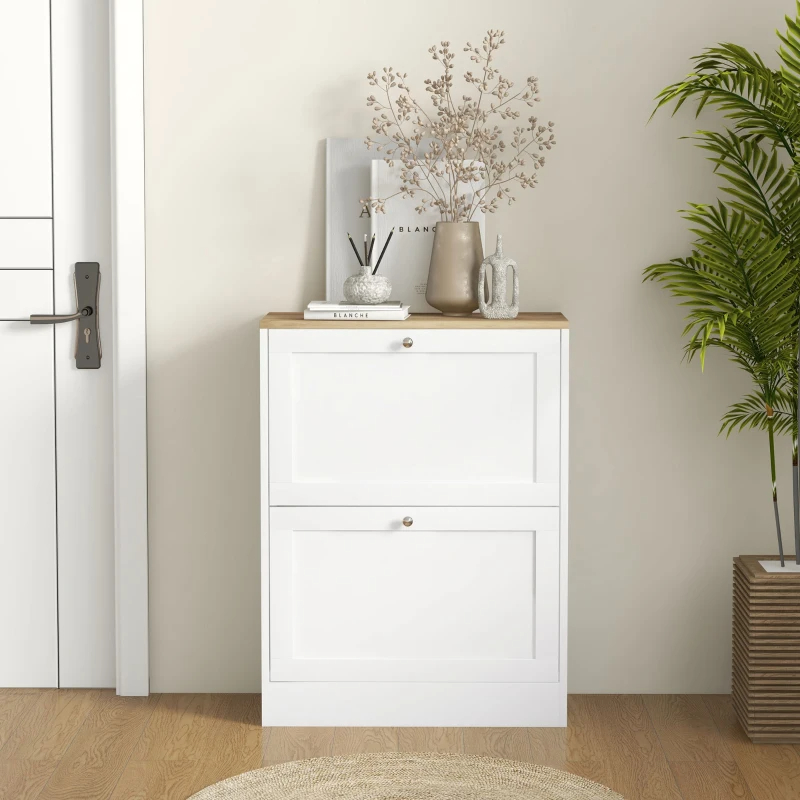 Slim Shoe Storage Cabinet, Modern With 2 Flip Drawers And Adjustable Shelves For 8-12 Pairs, White$77.99View on Mallflare
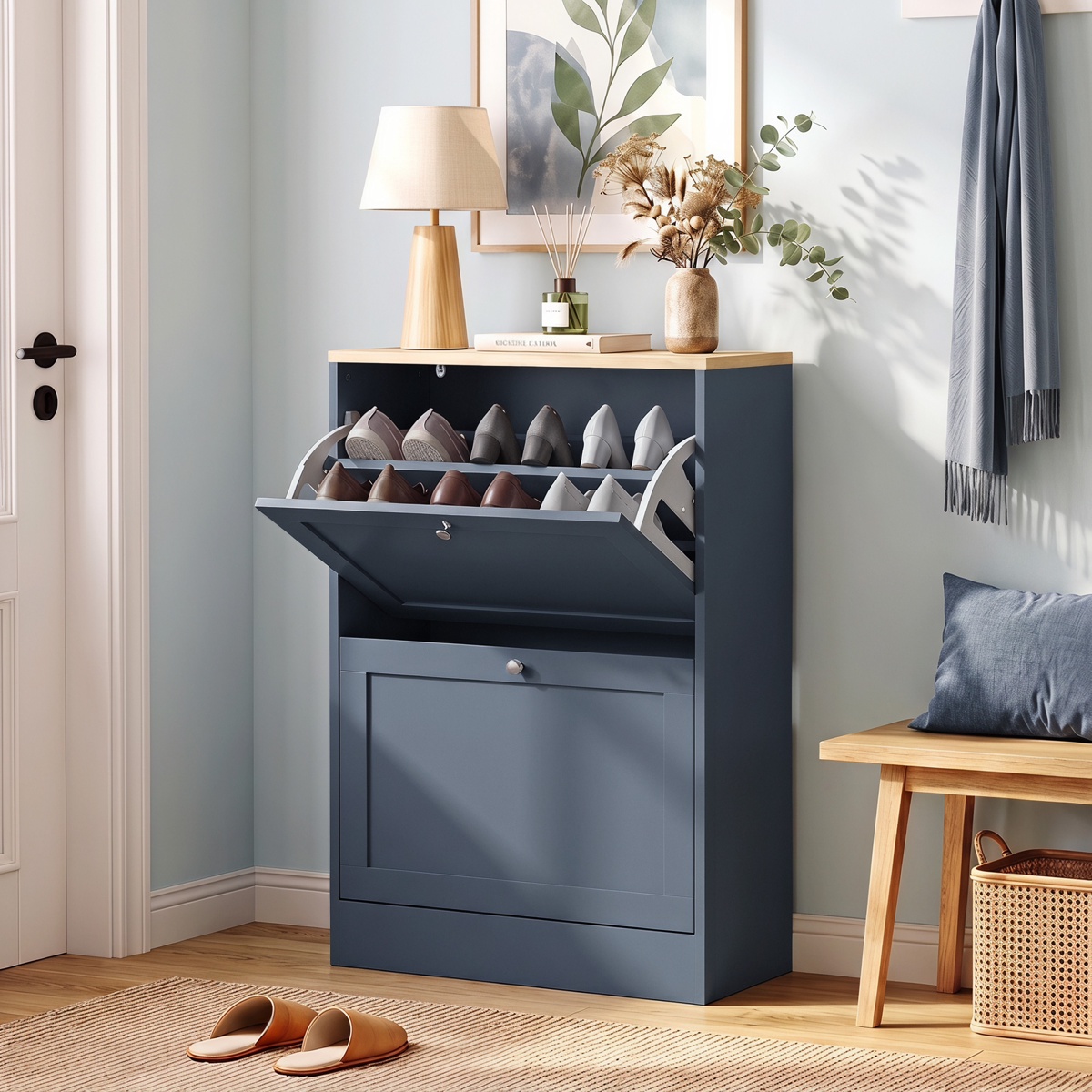 Slim Shoe Storage Cabinet, Modern with 2 Flip Drawers and Adjustable Shelves for 8-12 Pairs, Blue$78.99View on Mallflare
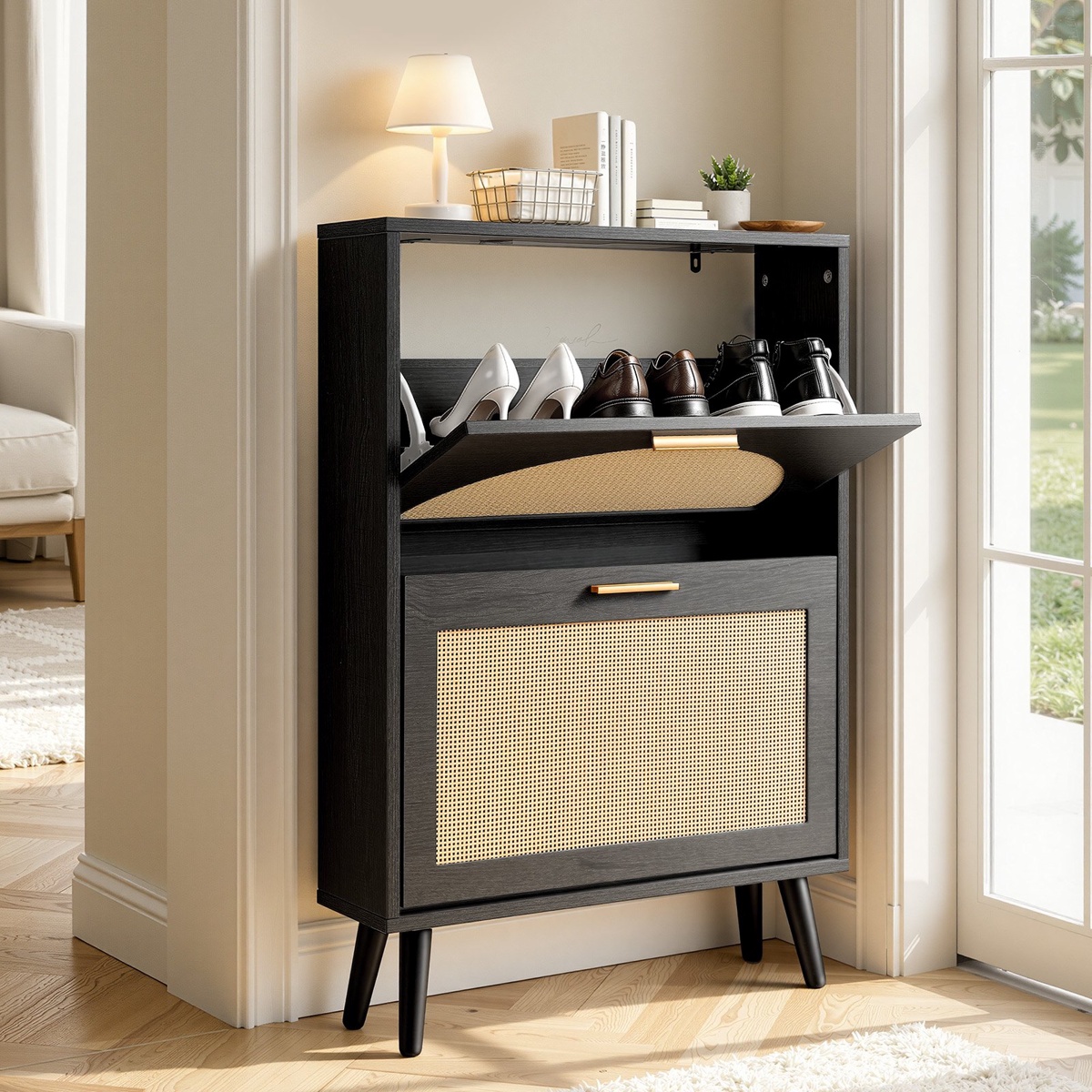 Rattan Shoe Cabinet, 6-Pair Organizer, 2 Flip Drawers, Slim for Entryway, Hallway and Living Room, Freestanding Narrow Shoes Wooden Rack, with 80 lb Top Surface and Tip-Over Restraint$80.99View on Mallflare
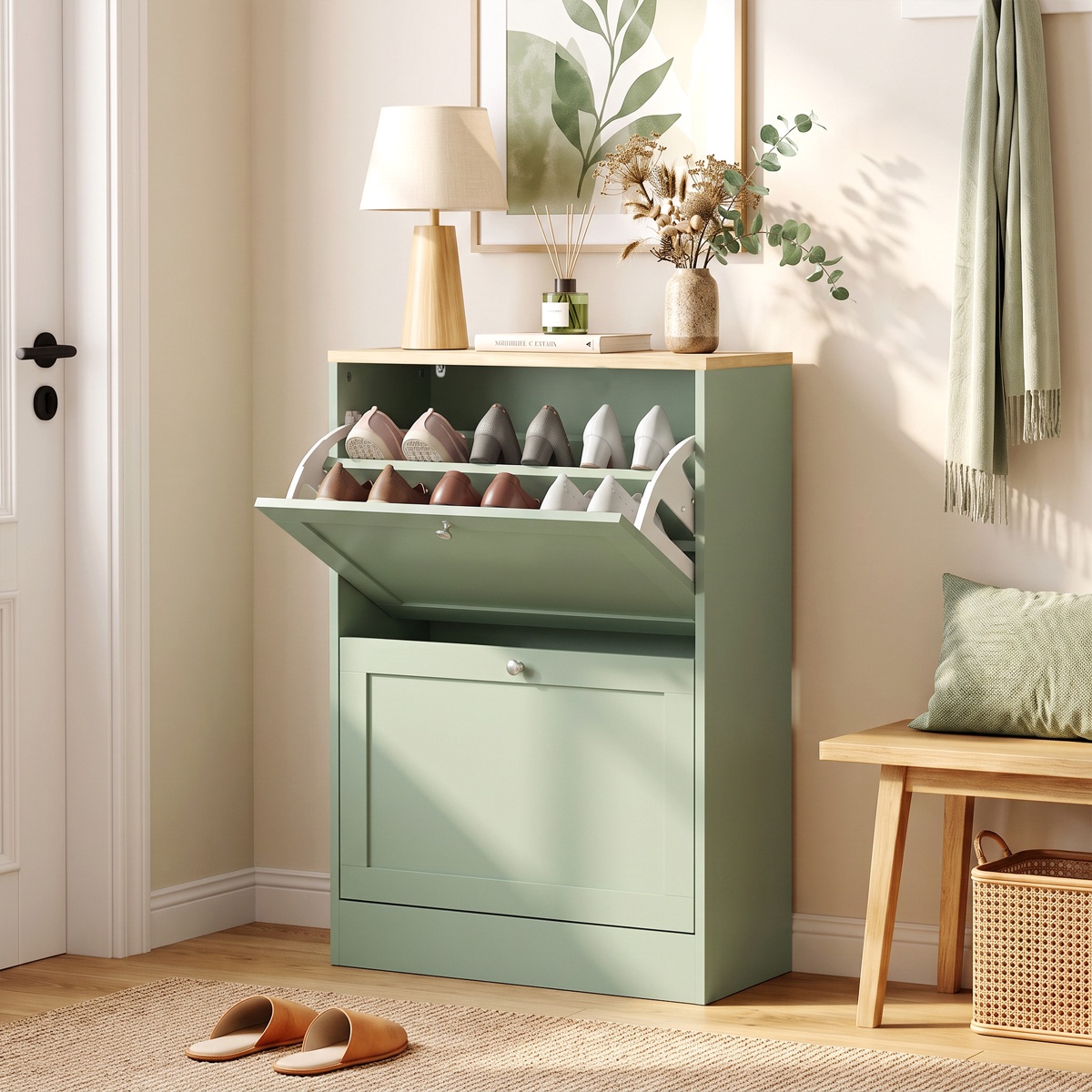 Slim Shoe Storage Cabinet, Modern with 2 Flip Drawers and Adjustable Shelves for 8-12 Pairs, Green$81.99View on Mallflare
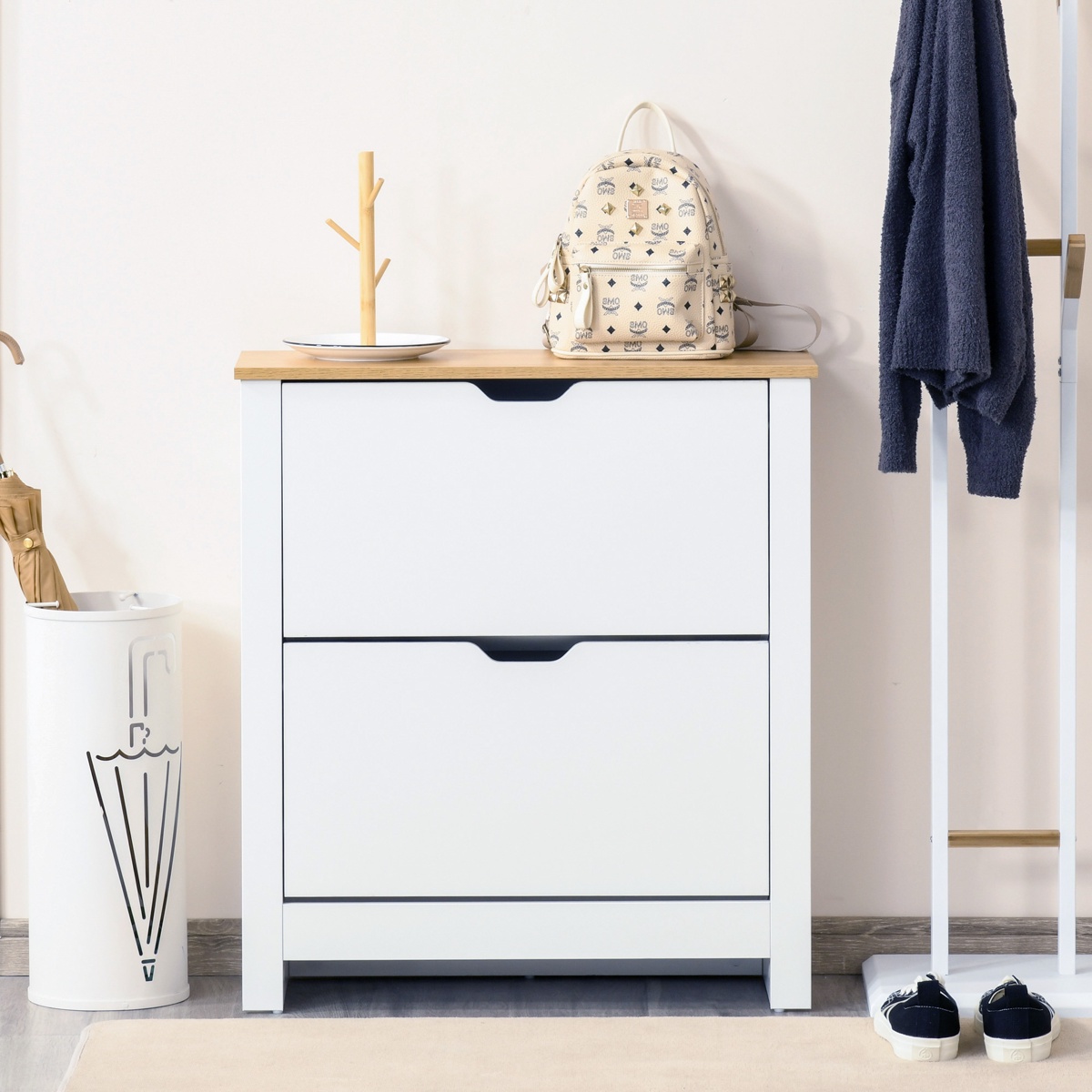 Slim Shoe Storage Cabinet, with 2 Flip Drawers and Adjustable Dividers, Natural & White$81.99View on Mallflare
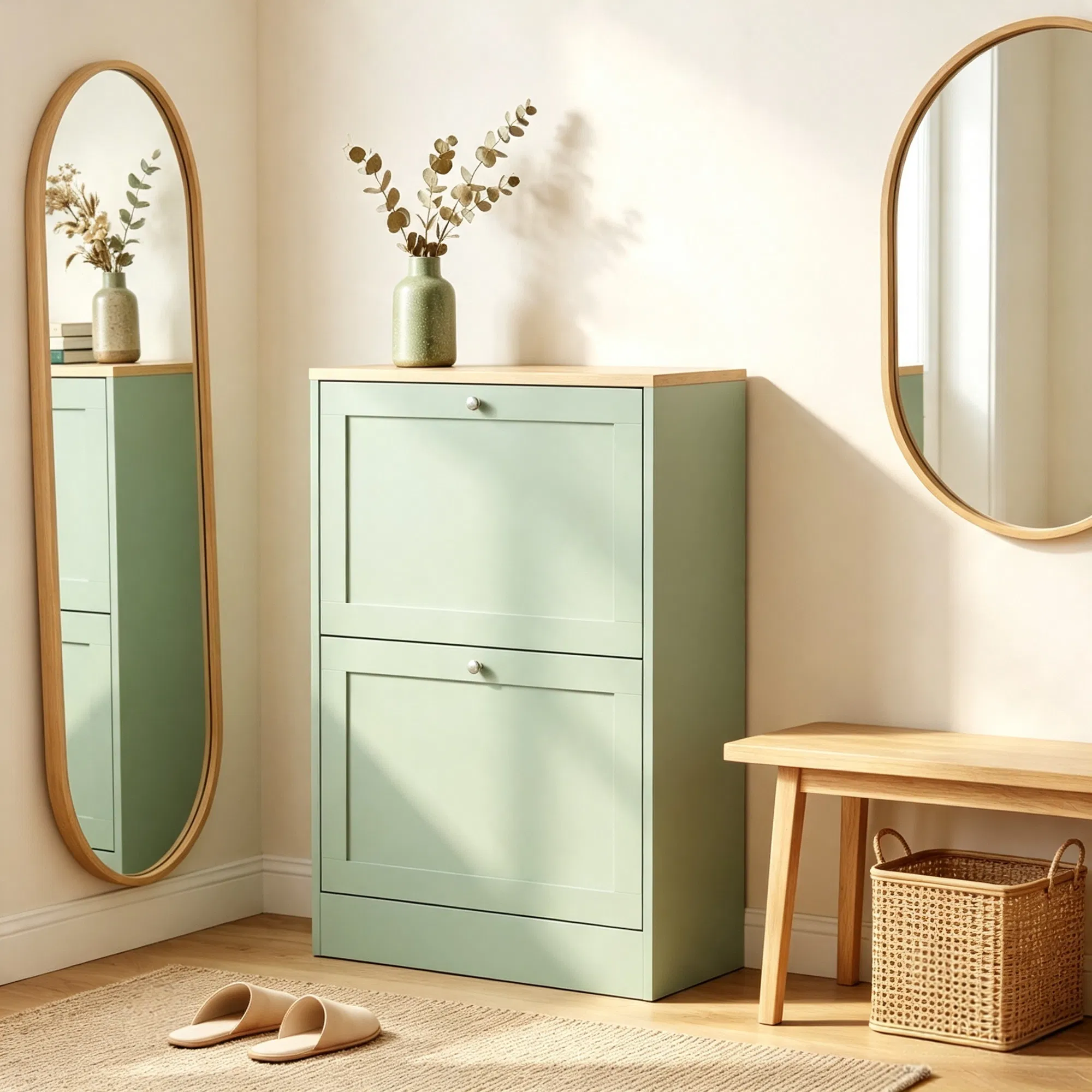 Modern Slim Shoe Storage Cabinet Green with 2 Flip Drawers And Adjustable Shelves for 8-12 Pairs of Shoes$118.99View on Mallflare
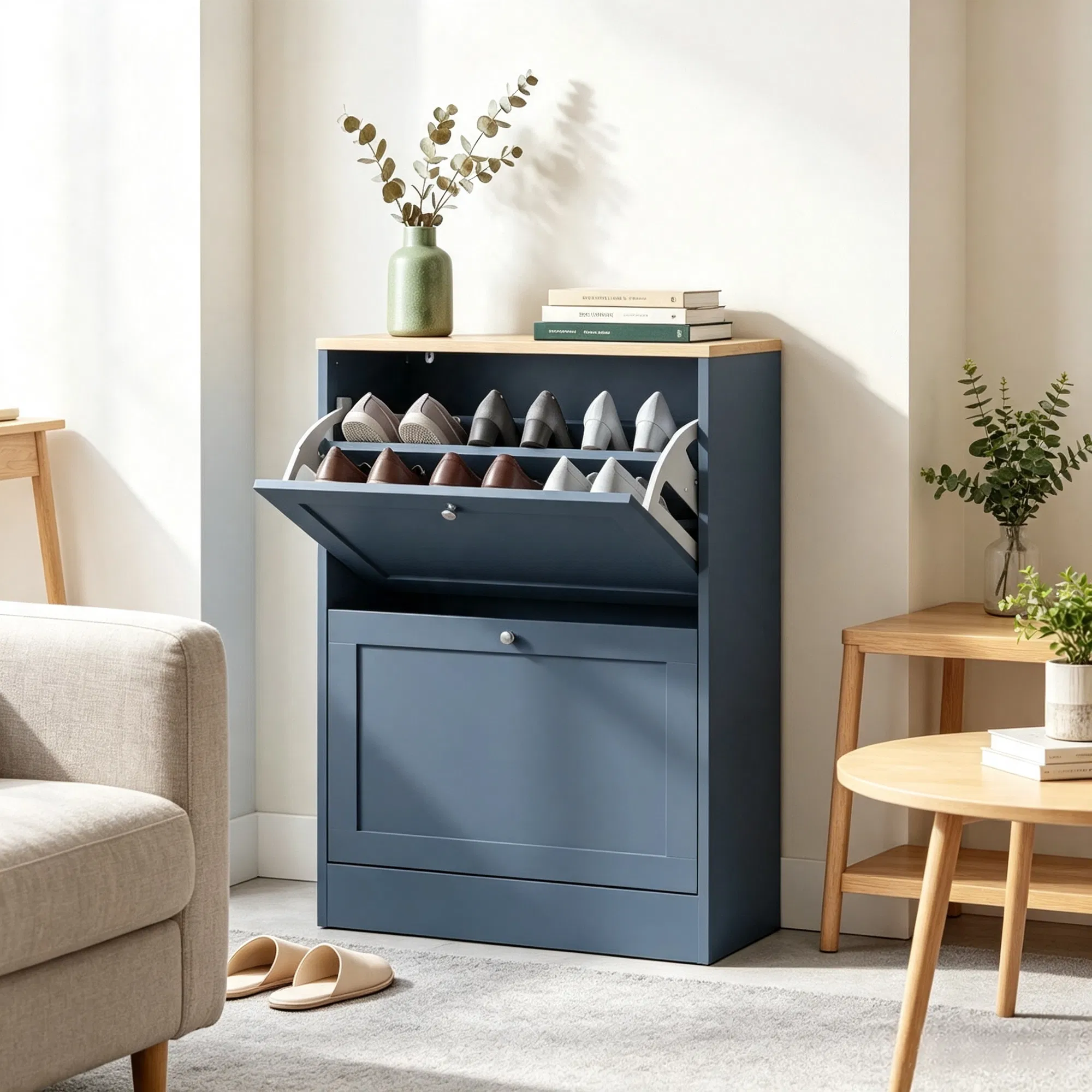 Modern Slim Shoe Storage Cabinet Blue with 2 Flip Drawers And Adjustable Shelves for 8-12 Pairs of Shoes$124.99View on Mallflare
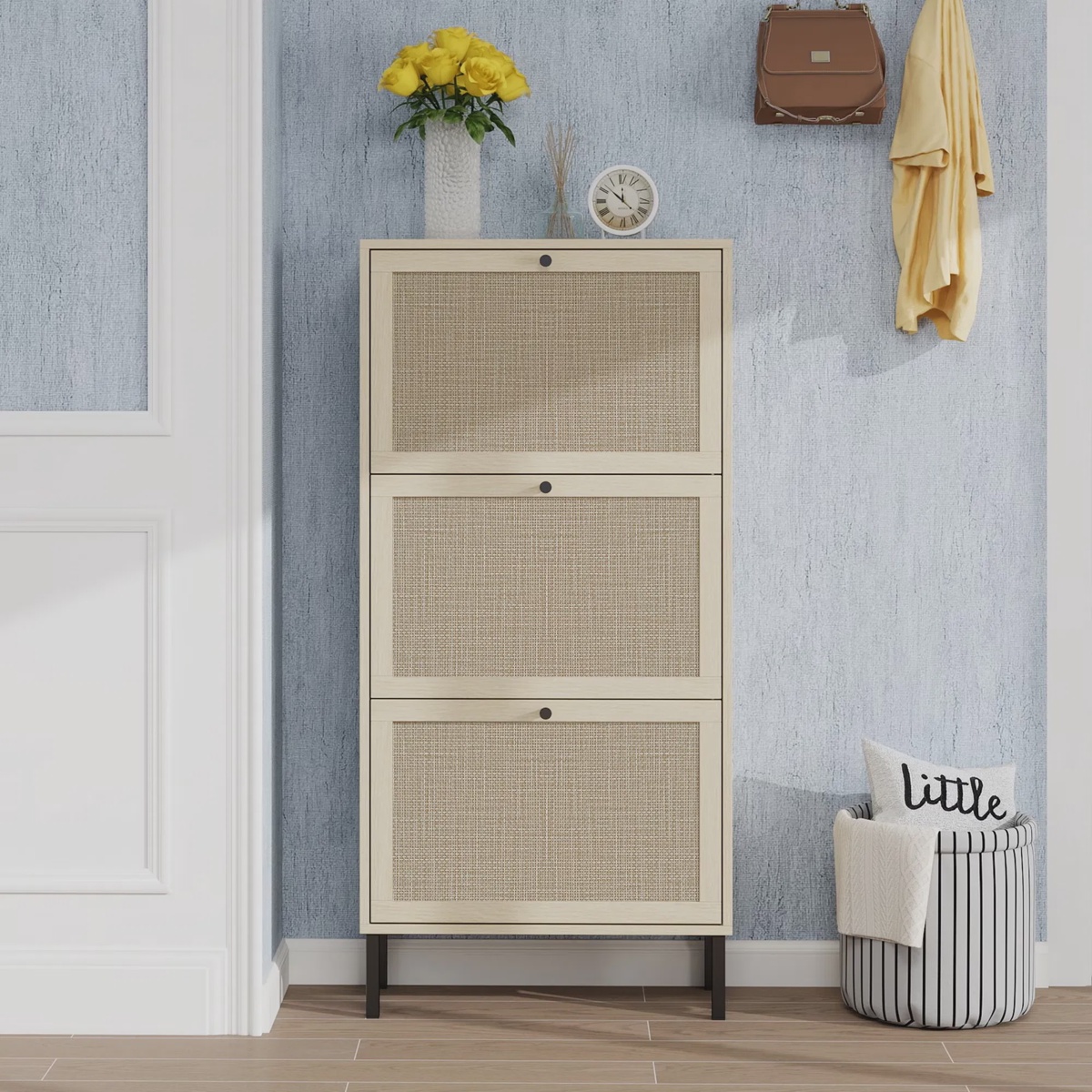 Shoe Storage Cabinet for Entryway,Modern with 3 Flip Drawers,Slim Freestanding Wood Rack for Entryway,Bedroom,Living Room,Natural02$161.99View on Mallflare
Highlights
- Flip-drawer capacity math: a standard 2-flip-drawer cabinet holds 8–12 pairs only when each drawer is at least 7.5 inches deep and 30 inches wide; narrower units drop to 6–8 pairs.
- Panel grade determines sag resistance: MDF or HDF holds hinge screws far better than honeycomb-cardboard-core 'wood' panels, which crush and strip at the hinge plate within months.
- Metal tilt-out hinge mechanisms (often rated 10,000+ cycles) with soft-close dampers prevent the drawer front from slamming and keep the shallow cabinet from tipping forward.
- Tip-over restraint hardware is mandatory for any cabinet over 30 inches tall; anti-tip straps or wall brackets are the difference between a stable hallway unit and a hazard.
Best use cases
- Best fit: a 9–12 inch deep, 2-flip-drawer cabinet with tip-over restraint for a hallway under 40 inches wide—pick this when the wall run cannot accept a full-depth bench.
- Wrong fit: a 6-pair 'slim' unit for a family of four—skip it and choose a 3-drawer or 12-pair tier if daily shoe volume exceeds 8 pairs.
- Best fit: a rattan-front or green/blue painted MDF cabinet as a visible entryway display piece; wrong fit: an unfinished particleboard unit in a humid mudroom, where swelling ruins the hinge alignment.
Buying tips
- Measure hallway depth first: a 12-inch cabinet leaves walking clearance in a 36-inch hall, but a 15-inch depth blocks passage—stay at or under 12 inches for true slim fit.
- Confirm the flip-drawer interior height: shoes up to men's size 12 need at least 5 inches of internal drawer clearance; low-profile drawers fit only flats and sneakers.
- Choose MDF/HDF or solid wood over particleboard for the drawer fronts, since flip hinges load the panel edge and particleboard strips screws under repeated cycling.
- Require a tip-over restraint in the box; a 30-inch-tall slim cabinet with two loaded drawers is front-heavy and must be anchored to wall studs.
Specs
| Drawer Mechanism | Flip-down tilt-out vs open shelf |
|---|---|
| Panel Material | MDF/HDF > particleboard |
| Depth Class | Slim 9–12 in vs standard 15+ in |
| Capacity Tier | 6–8 pairs vs 8–12 pairs |
Related searches
What to check before buying
- Hallway depth and width: confirm at least 30 inches of clear walking space remains after placing a 9–12 inch deep cabinet against the wall.
- Wall anchoring: locate studs or use drywall anchors rated for the cabinet's loaded weight, since tip-over restraint is non-negotiable for tall slim units.
- Shoe size audit: count pairs and measure the longest shoe (men's 12 ≈ 12.5 inches) to confirm the drawer depth and internal height fit without crushing.
- Floor and humidity: avoid particleboard in damp entryways or basements; specify MDF or sealed wood if the hallway sees seasonal humidity swings.
FAQ
Data sources: eBay / Amazon listings and product attribute feeds. Updated Nov 27, 2026.
Some links on this page are affiliate links. If you buy after clicking one, we may earn a commission at no extra cost to you. This does not change which products appear here or their order. Affiliate disclosure.